
What Causes Thyroid Problems?
By the Seed SistAs
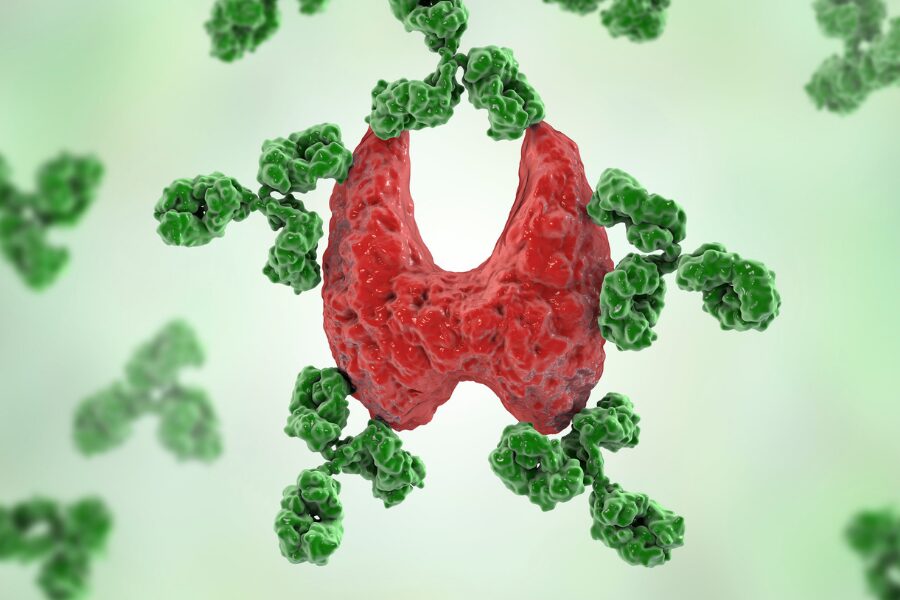
The thyroid is a small, butterfly-shaped gland located at the front of your neck, just below the Adam’s apple (the cartilage that covers your voice box). Despite its delicate size, the thyroid plays a mighty role in regulating your entire metabolism — it is like the body’s inner flame, quietly keeping everything in balance.
 Let’s first explain what exactly metabolism is since we hear this term a lot in relation to health and exercise. Metabolism refers to all the chemical processes that occur within the body to maintain life. It is essentially the way the body converts food and drinks into energy and the building blocks needed for growth and repair. Our bodies need this energy to do everything from moving to thinking to growing. These processes involve both breaking down substances (catabolism) and building them up (anabolism).
When the thyroid starts to under-function, a whole host of symptoms can arise long before you might even consider a blood test. Hair loss, mood swings, extreme tiredness and fatigue, increased sensitivity to cold, weight gain, constipation, and dry skin can all be signs that the flame of the thyroid is flickering low. Symptoms of hypothyroidism can be subtle, often developing gradually, like a slow fog settling in — which is why diagnosis can sometimes be delayed.
What is Hypothyroidism?
 We know all about this from first-hand experience. We Seed Sistas have both walked this path and experienced what the medical profession calls hypothyroidism. Hypo means under, so hypothyroidism refers to a thyroid that is under-active, struggling to produce the essential hormones that fuel the body’s natural rhythms. Hyperthyroidism is the opposite — a thyroid burning too brightly, producing too many hormones and speeding everything up.
Often, there is an autoimmune aspect to hypothyroidism — most commonly Hashimoto’s Disease. Hakaru Hashimoto (1881–1934), a Japanese doctor, first described this autoimmune condition in 1912.
Hashimoto’s thyroiditis is most prevalent in middle-aged women, with rates significantly higher than in men. While it can occur at any age, it is particularly common between 30 and 50, and the risk increases as women approach menopause. Globally, the disease affects about 7.5% of the population, with women experiencing a prevalence of 17.5% compared to 6% in men.
Causes of Hypothyroidism
- Hashimoto’s thyroiditis (autoimmune)
- Iodine deficiency
- Post-surgical or post-radiation
- Certain medications
Stress and the Thyroid
 Stress can significantly impact thyroid function — fanning or suppressing the body’s flame. Studies show that stress can influence the hypothalamus-pituitary-thyroid (HPT) axis, affecting thyroid-stimulating hormone (TSH) and thyroxine (T4) levels. This influence can sometimes lead to an overactive thyroid, but more often, it dampens function and pushes towards under-activity. Stress can also worsen the symptoms of autoimmune thyroid diseases like Hashimoto’s thyroiditis.
Stress ripples through the immune system via the nervous and endocrine systems. In doing so, it can help trigger or worsen autoimmunity in those who are genetically predisposed. Stress can, in this way, act as a hidden hand behind thyroid autoimmunity.
Mental and Emotional Health Links to Hypothyroidism
The clinical presentations of thyroid hormone deficiency are diverse, complicated, and often overlooked.
Hypothyroidism can show up as more than physical fatigue. It can present with low mood, anxiety, depressive symptoms, poor memory, clouded thinking — and in severe cases, even psychosis. This severe form, referred to as Myxedema Madness, was first described in 1949, linking psychosis to advanced hypothyroidism (myxoedema).
As thyroid function is supported and brought back towards balance, these mental and emotional symptoms often begin to lift, like mist clearing from a valley. Recognising these connections is vital, so that people don’t feel like they are “going mad,” but instead see these experiences as part of the broader thyroid picture.
Thyroid Facts
The thyroid is like the tuning fork of the body, setting the pace for how quickly or slowly everything moves.
What the thyroid does:
- Produces Hormones That Regulate Metabolism
◦ Thyroxine (T4) and Triiodothyronine (T3), released in response to TSH.
◦ This “conversation” between the brain and thyroid — the HPT axis — keeps the body in rhythm.
- Influences Other Body Systems
◦ Nervous system: mood, concentration, memory
◦ Cardiovascular: heart rate, blood pressure
◦ Digestive system: bowel rhythm and speed
◦ Reproductive system: fertility, libido, cycles
◦ Muscles & bones: strength and maintenance
◦ Skin, hair & nails: healthy growth and turnover
- Balances Energy and Heat
◦ Helps the body stay warm
◦ Determines how efficiently food is turned into usable energy
Emotional Influences of the Thyroid
 In holistic medicine, we understand that the physical cannot be separated from the emotional and spiritual. The thyroid, sitting directly over the voice box, holds symbolic and energetic resonance too.
Moments of shock, loss, or times when life feels out of control can imprint upon the thyroid. Past experiences of silenced expression, where speaking one’s truth felt unsafe, may also echo here. Part of the healing journey often involves exploring these emotional undercurrents — sometimes through talking therapy, journaling, or practices that free the voice.
Diet, Herbal & Lifestyle Support for Hypothyroidism
The thyroid thrives when gently supported with rest, nourishment, and balance. Approaches include:
- Insulin reduction (to ease strain on the thyroid)
- Deep rest & quality sleep (rest as medicine)
- Stress management (meditation, yoga, breathwork, grounding)
- Gentle movement (walking, yoga, tai chi)
- Nutritional support (iodine, selenium, zinc, vitamin D, iron, tyrosine)
- Herbal support (adaptogens like Ashwagandha, Rhodiola; supportive herbs like dandelion root, milk thistle, slippery elm, marshmallow root, lemon balm, St John’s Wort — always tailored to the individual)
Caring for the thyroid is about tending to the rhythms of your whole being. When the thyroid slows, it can feel as though life itself has become heavier, colder, or more difficult to move through. But this is also an invitation: to pause, to listen deeply to the body’s messages, and to create space for nourishment, rest, and renewal.
By weaving together nutrition, herbs, rest, gentle movement, and emotional healing, we can begin to restore balance not only to the thyroid but to the whole self. This journey asks for patience, compassion, and curiosity — qualities that allow true healing to unfold in its own time.
These blog articles are herbal education resources, produced by the Seed Sistas. Gain insights and join us in the evolution of healthcare, please do leave a comment or question. Wellbeing empowerment for all…


As a doctor & naturopath in Edinburgh I appreciate this post..I’ve also look learnt aspects I never fully appreciated before,I didn’t know re thyroid. I’ve also been to England on a seed sistas course which I enjoyed