

Hemlock or Hemlock Water Dropwort — And Why We Don’t Work With Them
By the Seed SistAs
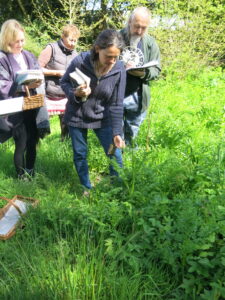 The plant kingdom is full of species that look remarkably similar, making accurate identification essential for both safety and ecological understanding. Two of the most toxic—and commonly confused—plants are hemlock (Conium maculatum) and hemlock water dropwort (Oenanthe crocata). These deadly members of the Apiaceae family are sometimes mistaken for edible or medicinal plants, which makes their identification even more critical.
Why People Confuse Hemlock Herbs
Hemlock is often mistaken for edible or medicinal herbs such as Alexanders, cow parsley, or Angelica. Hemlock water dropwort, due to its wet habitat, is commonly confused with watercress, wild carrot, or wild parsnip. Despite superficial similarities, these plants differ significantly in their appearance, habitat, and toxicity.
A Bit of History and Folklore of Hemlock
Hemlock (Conium maculatum) has long been associated with witchcraft, magic, and, most infamously, poison. In ancient Greece, it was the state’s chosen method of execution—used most famously in the death of the philosopher Socrates in 399 BCE. Folk names like “Warlock’s Weed” and “Devil’s Porridge” speak to its fearsome reputation.
We often work with herbs that were historically considered poisonous, so we’re frequently asked whether we use Conium maculatum in our practice. The answer is simple: absolutely not. This plant, and others in its toxic family, clearly demonstrate how narrow the gap is between a therapeutic dose and a fatal one—far too narrow for safe use in modern herbal medicine.
-

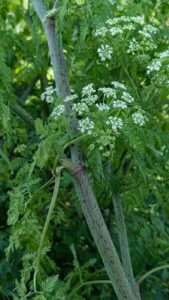
- Hemlock

-
- Hemlock

Tragically, there have been multiple deaths caused by the accidental ingestion of hemlock, often due to misidentification with edible plants, like parsley, wild carrot, or watercress—highlighting the very real dangers of foraging without expert knowledge.
In 2002, a man in the UK died after mistaking Conium maculatum (poison hemlock) for parsley and using it in a sandwich. This tragic case, reported by the BBC, highlights how easily misidentification can lead to fatal consequences — even with commonly foraged plants.
(BBC News, 2002. “Man dies after eating poisonous plant.”)
Another case, a group of young adults on holiday in Argyll, Scotland, suffered seizures after mistaking hemlock water dropwort roots for wild parsnip and cooking them in a curry; in another, two British foragers on Sully Island in Wales were hospitalized after ingesting what was believed to be hemlock, though they fortunately recovered.
-

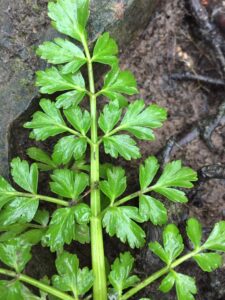
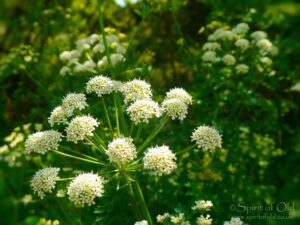
- Hemlock water dropwort
-

- Hemlock water dropwort
How to Identify Hemlock and Hemlock Water Dropwort
Poison Hemlock (Conium maculatum)
- Family: Apiaceae (Carrot family)
- Appearance: Tall biennial plant (up to 2.5m), with smooth, purple-blotched hollow stems and finely divided, fern-like leaves.
- Flowers: Small white flowers arranged in umbrella-shaped clusters (umbels), blooming in summer.
- Habitat: Commonly found on roadsides and disturbed ground.
- Toxicity: Highly poisonous – all parts are toxic if ingested. Known for killing Socrates in ancient Greece.
- Odour: Has an unpleasant mousy or musty smell when crushed.
Hemlock Water Dropwort (Oenanthe crocata)
- Family: Apiaceae
- Appearance: Robust perennial (up to 1.5m), with hairless hollow stems grooved like celery and lush, shiny green, pinnate leaves.
- Flowers: The flowers grow from a central stem. There 12-20 thin stems growing from the top of the stem which at the top are 15+ more thin stems each with a single flower with 5 boomerang shaped leaves around a creamy off white centre and long white anthers with a black tip. appearing in late spring to summer.
- Habitat: Prefers wet environments – ditches, stream edges, marshes.
- Toxicity: Extremely poisonous, especially the tuberous roots which can resemble parsnips. The toxins can be fatal.
- Odour: Faint carrot-like smell, which can mislead foragers.
Why We Avoid These Hemlock Plants in Herbal Practice
Both hemlock and hemlock water dropwort contain potent neurotoxins. Misidentification or improper handling can be fatal.
Hemlock Toxicity and Symptoms of Poisoning
Hemlock contains piperidine alkaloids (coniine and γ-coniceine), which are extremely toxic. All parts of the plant are poisonous. Symptoms of ingestion may include:
- Tremors, salivation, vomiting
- Muscle paralysis
- Respiratory failure
- Convulsions, coma, and death
Hemlock water dropwort contains oenanthotoxins, which are water-soluble and equally dangerous. It is considered one of the most toxic plants in Europe. Symptoms of poisoning are similar but may occur more rapidly, even in small doses.
Historical Medical Use (and Why It’s No Longer Used)
In ancient times, hemlock was prescribed as a sedative and antispasmodic. Greek and Arab physicians applied it to relieve joint pain and other ailments. However, the margin between a therapeutic and lethal dose is razor-thin, and the plant is no longer worked with at all in modern western herbal medicine.
What to Do in Case of Hemlock Poisoning
If you suspect someone has ingested hemlock or hemlock water dropwort, seek immediate medical attention. Though treatment in a hospital is often successful if administered quickly, time is critical.
In herbal first aid traditions, we may follow up poisoning treatment with:
- Activated charcoal (to help absorb remaining toxins)
- Milk thistle (for liver support)
- Kidney-supporting herbs in the recovery phase
However, these should never be considered substitutes for urgent medical care.
Both hemlock and hemlock water dropwort are beautiful and powerful, but they are not to be trifled with. We deeply respect their place in the plant kingdom — and we admire them from a safe distance. If you’re learning to forage or work with herbs, always err on the side of caution and consult with knowledgeable guides before working with any wild plant, especially those in the Apiaceae family.
These blog articles are herbal education resources, produced by the Seed Sistas. Gain insights and join us in the evolution of healthcare, please do leave a comment or question. Wellbeing empowerment for all…


Thsnkyou